Priced Out of Proof-of-Stake: The Infrastructure Costs Quietly Centralizing Ethereum
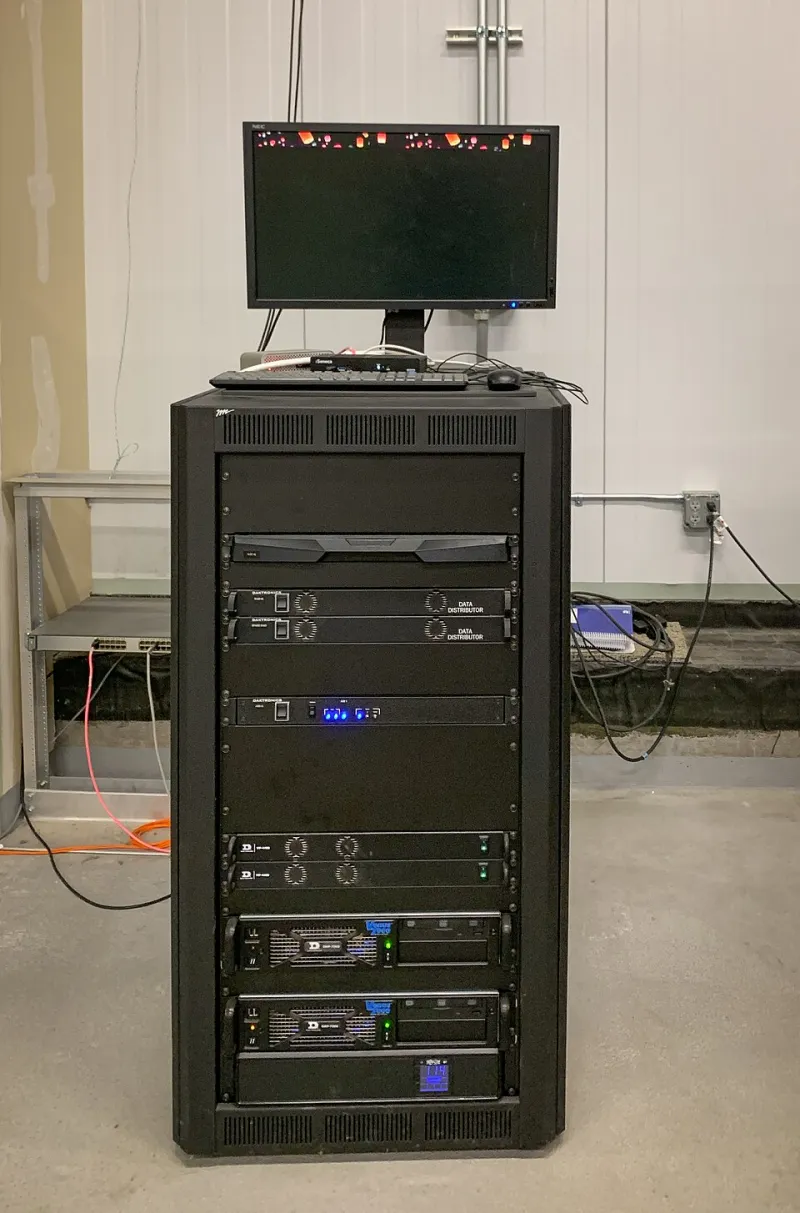
Photo: Tony Webster, CC BY 2.0, via Wikimedia Commons
When Ethereum completed its transition to proof-of-stake in September 2022, the Merge was heralded as a democratizing moment. No longer would securing the network require energy-intensive mining rigs accessible only to industrial operators. A home staker with 32 ETH and a modest computer could, in theory, participate in consensus on equal footing with the largest institutions. That narrative, while compelling, is encountering a harder reality two years on.
The cost of running an Ethereum validator — reliably, competitively, and without penalty — has climbed in ways that are not always visible in headline figures. Hardware inflation, evolving client software demands, and the operational discipline required to avoid slashing penalties are collectively raising the floor for participation. The result is a validator set that, on paper, remains distributed but is quietly consolidating around entities with the infrastructure budgets to match.
What It Actually Costs to Run a Validator Today
The minimum hardware recommendation for an Ethereum validator has shifted meaningfully since the Merge. Early guidance pointed to consumer-grade machines — a mid-range desktop with 16 GB of RAM and a 1 TB SSD was considered workable. That ceiling has since risen. The growth of Ethereum's historical state data now demands 2 TB of fast NVMe storage at minimum, with many operators moving toward 4 TB configurations to maintain adequate headroom. High-availability setups, which guard against the downtime penalties that erode staking returns, often require redundant internet connections and uninterruptible power supplies.
A realistic all-in hardware build for a home validator in the United States — accounting for a capable processor, sufficient RAM, NVMe storage, and peripheral reliability components — now runs between $800 and $1,500. That figure excludes the 32 ETH deposit requirement, which at current prices represents a capital commitment well above $100,000. Electricity costs in most US markets add a modest but persistent operating expense, typically $15 to $40 per month depending on local rates and machine efficiency.
For a solo staker earning roughly 3.5% annually on 32 ETH, gross yield in dollar terms is meaningful — but the margin narrows once infrastructure costs and the opportunity cost of locked capital are factored in. More importantly, any validator downtime or misconfiguration introduces inactivity leaks and, in severe cases, slashing events that can erode principal. Maintaining the technical competence to avoid these outcomes is itself a non-trivial ongoing cost.
The Institutional Advantage
Large staking operators — Lido, Coinbase, Binance, and a handful of institutional node services — face a fundamentally different cost structure. Their hardware expenses are amortized across thousands of validators running on enterprise-grade server infrastructure. Redundancy, failover, and monitoring are built into their operational models. The marginal cost of adding a validator within an existing rack is a fraction of what a home staker pays to stand up a single node.
This asymmetry compounds at the software layer. Keeping validator clients updated, monitoring for network forks, and managing MEV-boost configurations require ongoing attention that professional operators handle through dedicated engineering teams. For a solo staker who maintains their setup as a side endeavor, each client update or configuration change carries execution risk that institutional operators systematically manage away.
The concentration this creates is already visible in on-chain data. Lido alone controls approximately 28% of all staked ETH, a figure that has drawn sustained scrutiny from Ethereum researchers concerned about governance risk and censorship resistance. The top five entities by staked ETH collectively account for more than half of the network's validator set. The distribution below that threshold is broader, but the trend line over the past 18 months points toward continued consolidation rather than dispersion.
Liquid Staking's Double Edge
The proliferation of liquid staking protocols — products that allow users to stake ETH without running a validator themselves — has addressed the accessibility problem in one dimension while potentially deepening it in another. Services like Lido's stETH, Rocket Pool's rETH, and Coinbase's cbETH have lowered the effective entry point for staking participation to any ETH balance, removing both the 32 ETH threshold and the hardware requirement entirely.
For retail participants, this is a genuine improvement. Yield that was previously inaccessible without substantial capital or technical expertise is now a few clicks away. But the validators actually processing those deposits remain concentrated among a relatively small number of node operators. Liquid staking democratizes the yield without distributing the consensus power — a distinction that matters for the network's censorship resistance and its ability to withstand coordinated attacks or regulatory pressure on dominant operators.
Rocket Pool's architecture attempts to address this by requiring node operators to stake their own ETH alongside depositor funds, creating a more distributed validator set. Its minimum operator requirement of 8 ETH (recently reduced from 16 ETH) and the rETH bonding mechanism impose meaningful skin-in-the-game constraints. However, Rocket Pool's market share remains a fraction of Lido's, limiting the systemic impact of its more decentralized model.
What Network Resilience Actually Requires
Ethereum's security model depends on the assumption that no single entity controls enough of the validator set to finalize conflicting chains or censor transactions at scale. The 33% threshold for disrupting finality and the 51% threshold for more severe attacks are not abstract numbers — they represent real concentrations that the current staking distribution is approaching in some scenarios if liquid staking entities are treated as unified actors.
Ethereum developers have proposed several mechanisms to address validator concentration, including anti-correlation penalties that would impose heavier slashing on operators whose validators fail simultaneously — a configuration that penalizes large, homogenous node operators more than distributed solo stakers. Proposals around maximum effective balance adjustments and changes to validator entry queues are also under discussion, though none have reached consensus on implementation timelines.
In the near term, the structural economics favor continued consolidation. Hardware costs will not decline materially, the technical barrier to solo staking will not disappear, and liquid staking protocols offer a convenience premium that most retail participants will rationally prefer. The question for Ethereum's long-term architecture is whether protocol-level incentives can be redesigned to offset those economics before the validator set narrows past a threshold that meaningfully compromises the network's founding promise.
The Signal in the Squeeze
For investors and participants tracking Ethereum's network health, the validator cost dynamic is a structural variable that deserves more attention than it typically receives in price-focused analysis. A validator set that grows more concentrated is not an immediate crisis — Ethereum continues to function, finalize blocks, and process transactions at high throughput. But concentration introduces tail risks that are difficult to price until they materialize.
Monitoring the share of staked ETH controlled by the top five operators, tracking the growth rate of solo validators relative to liquid staking inflows, and watching for protocol governance proposals on anti-concentration mechanisms are all meaningful signals. The health of a proof-of-stake network is not fully captured by its token price or its transaction volume. It is also a function of who, exactly, is doing the validating — and whether that answer is becoming narrower over time.